Nightstand Charging Cable Tray: A Calmer Bedtime Station for Small Rooms
A nightstand charging tray should make bedtime easier, not turn the smallest surface in the room into a hot knot of cords. The best layout is modest: one safe charging path, one landing place for the device you actually keep near the bed, and enough empty surface that a lamp, water glass, glasses case, or book does not compete with cable loops. This guide treats the nightstand as a small-room safety and routine problem, not a product roundup.
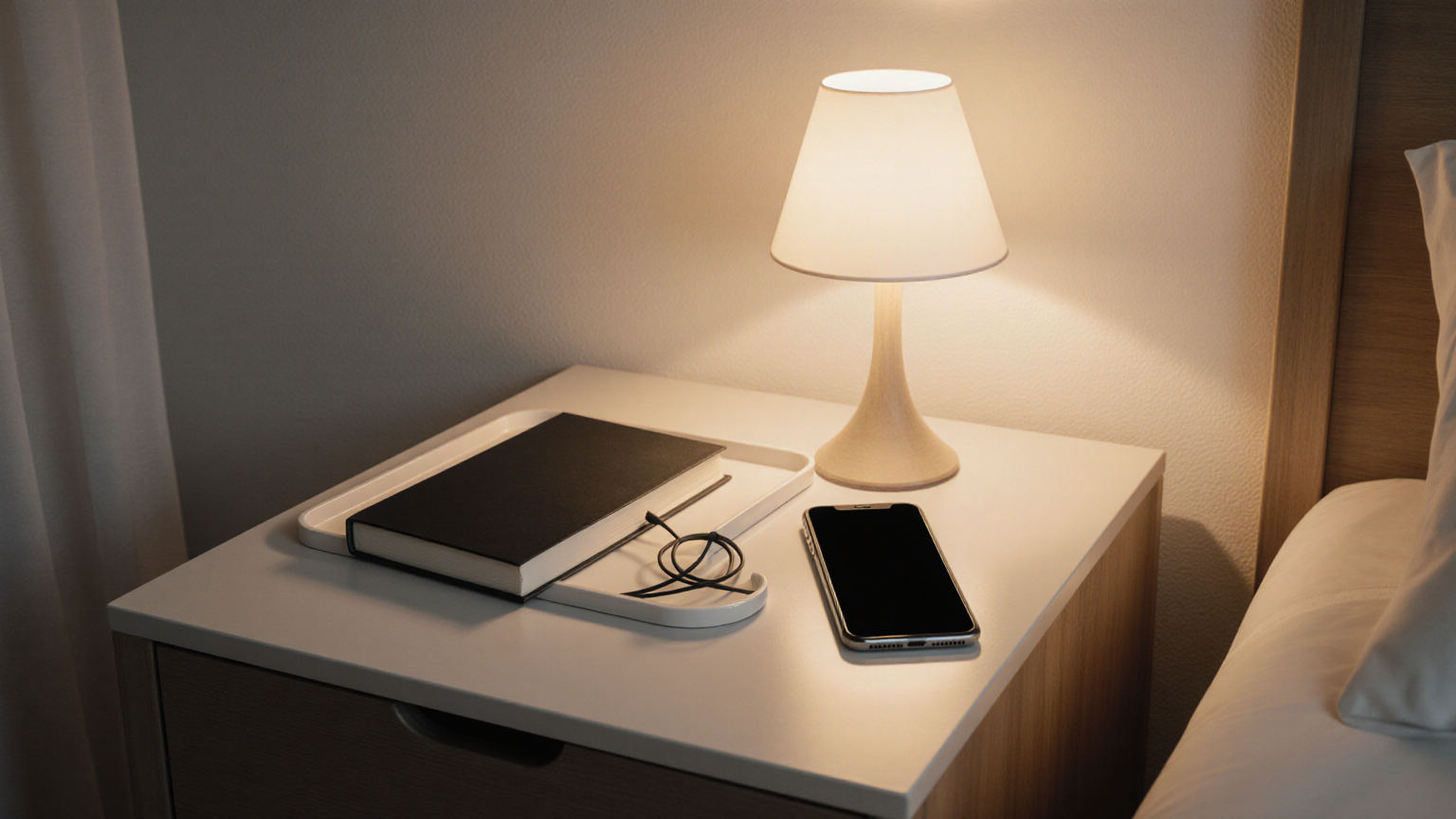
Start with the surface you already have
Before buying a dock, measure the usable top of the nightstand and remove everything that does not serve bedtime or waking. A tray helps only when it gives cables a boundary. If the tray becomes a second junk drawer, it adds clutter instead of reducing it. Keep the first test simple: lamp, one charging cable, one dark-screen phone position, and one small non-electronic item such as a book or glasses case.
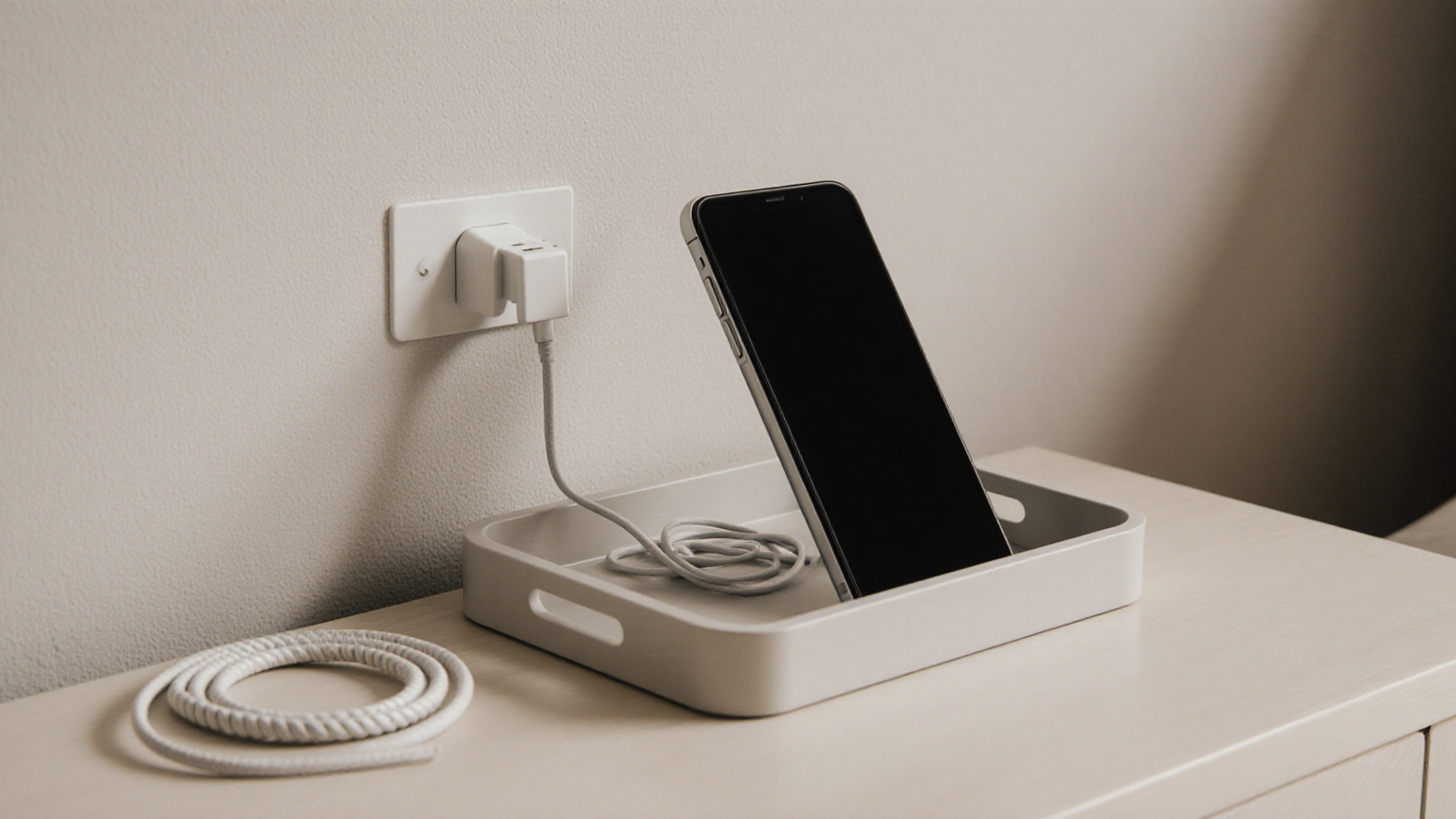
Safety-first placement rules
Charging belongs on a stable, ventilated surface. Avoid placing charging devices under pillows, blankets, stacks of paper, or fabric bins. Do not stretch cords across a walking path, around a bed leg where they can snag, or under a rug where damage can hide. If the outlet sparks, feels hot, is loose, or forces a plug to hang halfway out, stop the layout project and ask a qualified electrician or property manager for help.
| Placement question | Safer answer | Avoid |
|---|---|---|
| Where should the cable run? | Behind the nightstand with a small slack loop | Across the walking path |
| What should sit in the tray? | One device and one coiled cable | Multiple warm adapters stacked together |
| What if the outlet is far away? | Reposition furniture or use an appropriately rated solution | Daisy-chaining power strips or hiding cords under rugs |
| What belongs near the bed? | Items needed at bedtime or waking | Receipts, loose batteries, papers, and rarely used gadgets |
The ten-minute cable audit
Do the audit before reorganizing. Unplug nothing yet. Count every cord that reaches the nightstand and ask what it charges, how often it is used, and whether it is safe to keep there overnight. Remove cables that charge devices used in another room. Move occasional chargers to a labeled drawer or shared charging spot outside the bedroom. The goal is to make the default path obvious enough that you do not have to untangle it when tired.
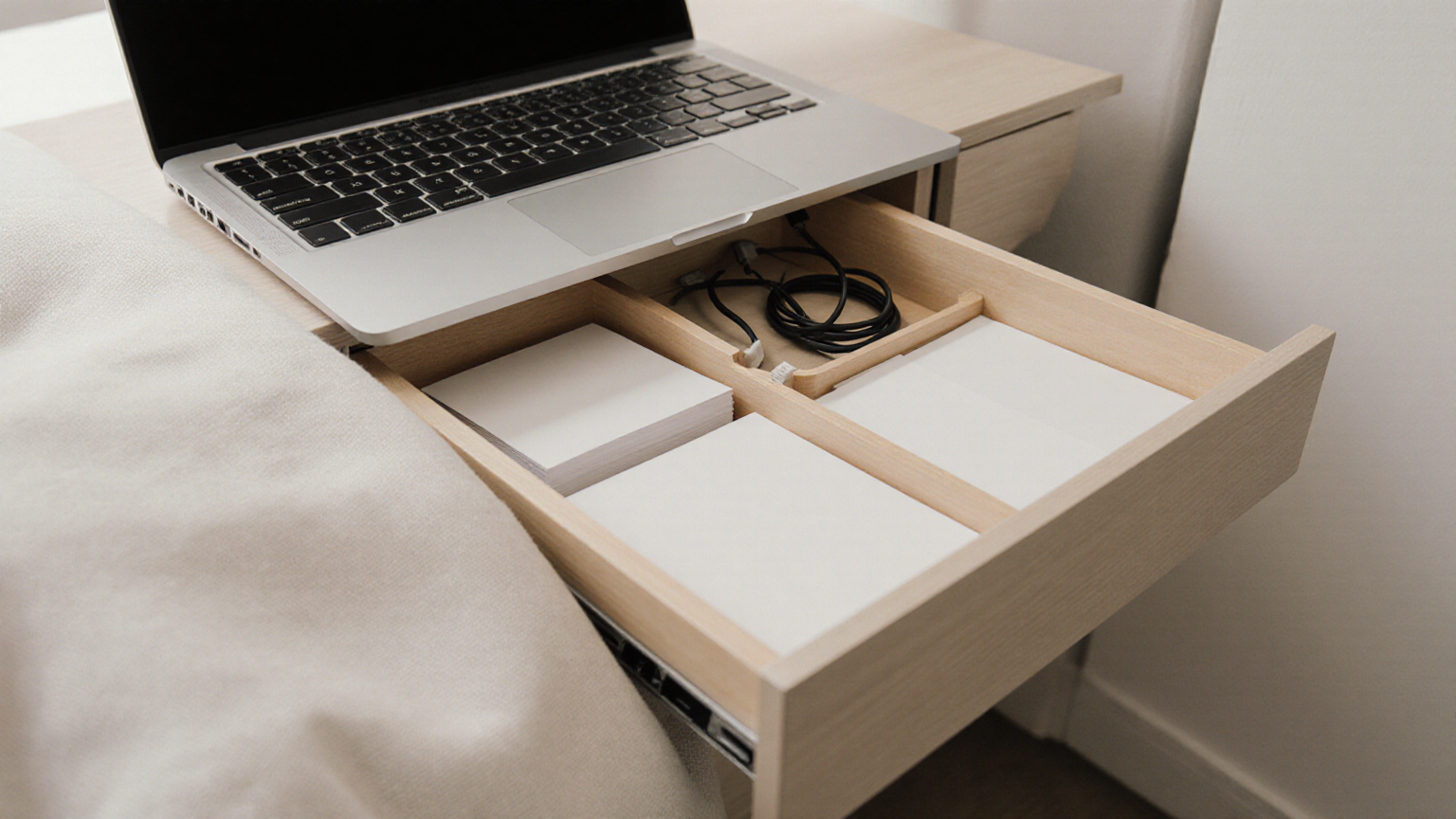
Build a low-clutter bedtime station
- Put the tray on the side of the nightstand farthest from the walking edge.
- Route the cable behind the furniture with a gentle bend, not a tight pull.
- Leave a finger-width gap around adapters so heat can dissipate.
- Keep paper, tissues, fabric, and books out of the tray itself.
- Test reaching for water, lamp, glasses, and phone in the dark without crossing cords.
- If a roommate, child, pet, or guest uses the room, check that the cord path is still obvious from their angle.
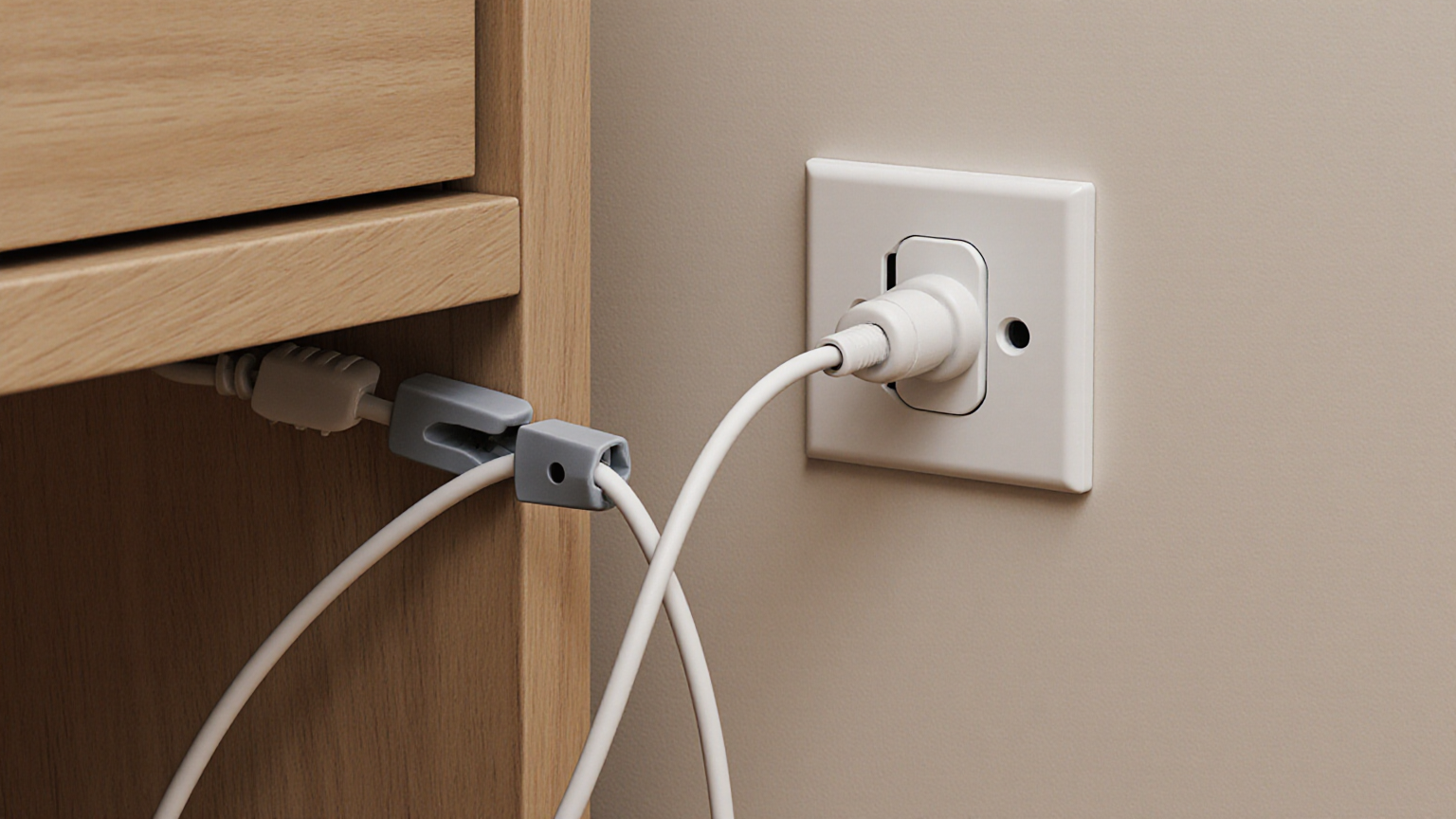
Small-room troubleshooting
If the room is too narrow for a side table, use the wall side of a headboard shelf only when it is stable and the cord does not drop into the bed. If the only outlet is behind the bed, avoid crushing the plug with furniture. If the nightstand drawer is the only hidden storage, reserve the drawer for coiled spare cables and keep the active charger on the surface where heat and damage are easier to notice. A clean-looking hidden cable is not better if you cannot inspect it.
Make the station calmer, not more connected
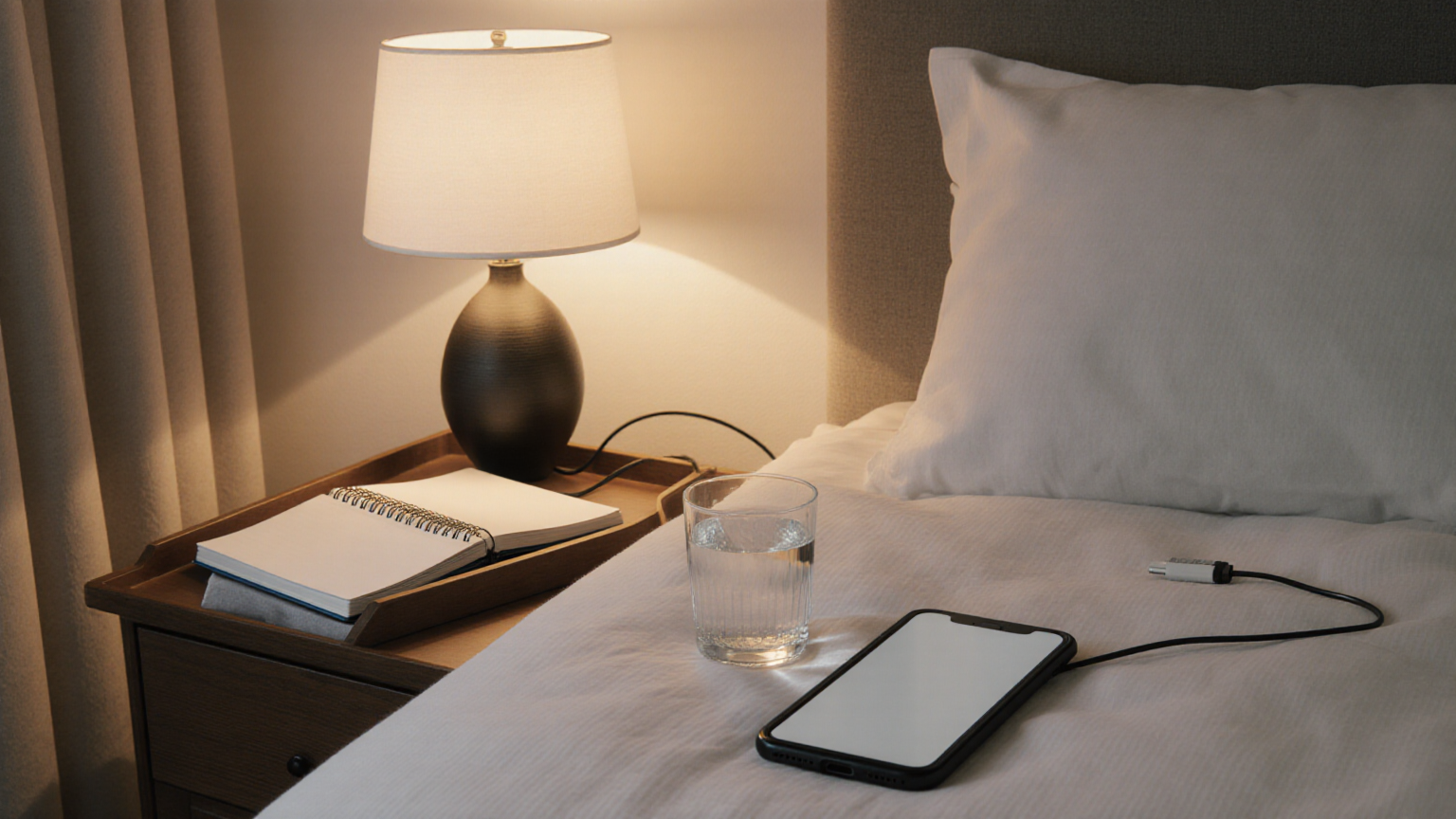
A bedroom charging zone can also protect sleep routines. Set notifications before the phone enters the tray, not while you are in bed. If a phone is not needed for alarm, emergency contact, or accessibility reasons, consider charging it outside the room. If it must stay nearby, keep the screen face down or dark, with the cable long enough to charge but not long enough to invite scrolling from the pillow.
Maintenance checklist
- Weekly: remove papers, wrappers, and unused cables from the tray.
- Monthly: inspect cable jackets for kinks, exposed wire, discoloration, or warm plugs.
- Seasonally: check whether the lamp, humidifier, fan, or heater changes the safe cord path.
- After moving furniture: retest the path in the dark so it does not become a trip line.
- Before buying organizers: reduce the number of devices first.
Reader trust and scope note
This article preserves Interior Note’s reader-first quality standard by focusing on safety, clear decisions, and non-commercial alternatives. It cites electrical safety, fire safety, fall-prevention, indoor-air, product-safety, and sleep-hygiene sources, but it is not a substitute for a licensed electrician, landlord, property manager, medical professional, or manufacturer instructions when a device, outlet, lease, or health condition requires specific guidance.
Concise summary
A useful nightstand charging tray is small, visible, and easy to maintain. Keep one active cable path, avoid heat-trapping clutter, protect the walking route, and review the setup whenever furniture or devices change. The best result is not a perfect photo; it is a bedside surface that stays calm when you are tired.